The Story Nook by Katalina

Welcome to The Story Nook by Katalina
A place for timeless children’s stories told through animals—or through children discovering who they are. This is where big feelings, quiet wisdom, and imagination live side by side.
Book Club Corner
Book Club Corner is where the story continues, quietly. A space for questions, reflections, and a closer look at why the book was written — and what it’s meant to leave behind.

Author Q&A with Katalina Klein
A gentle lesson about sibling rivalry, big emotions, and the powerful choice to use your words instead of your sting.
Q: What inspired The Secret of the Bees?
A: I wrote this story after witnessing my own children argue — the kind of fighting that can be loud, dramatic, and full of feelings. I wanted to create something that helped children pause, reflect, and learn that words carry power — for healing or for harm.
Q: Why bees?
A: Bees are fascinating. They can sting — but they usually don’t. They communicate. They cooperate. I thought they were the perfect symbol for what happens when we choose to be kind even when we’re upset.
Q: What’s the heart of this story for you?
A: That kindness takes strength. That our words matter. And that even siblings — who fight and forgive all the time — can learn how to express themselves without hurting each other.

Author Q&A with Katalina Klein
The farther Turbo wandered from his pond, the more his song began to fade. This gentle story helps children understand that even when the world feels too big or too loud, the feeling of calm, safety, and belonging can return.
Q: What inspired Turbo the Turtle and the Lost Song?
A: I’ve always believed animals carry wisdom, and turtles especially have this quiet, ancient energy. I wanted to explore what happens when we lose the things that make us feel safe — and how, sometimes, we need to return to what we know to remember who we are.
Q: What does the “song” represent in the story?
A: The song is a symbol for connection — to self, to place, to peace. As Turbo drifts farther from home, his song fades. That happens to all of us when we feel lost or out of place. But it’s never truly gone. It just waits for us to find it again.
Q: What message do you hope children take from Turbo’s journey?
A: That anxiety and uncertainty are normal. That it’s okay to feel lost. And that our inner voice — our song — always returns when we find where we belong.

Author Q&A with Katalina Klein
When someone we love dies, the world can feel strange and still. Theo Was Here gently helps children carry loss by showing that love doesn’t leave — it just finds a quieter place to live.
Q: What inspired you to write Theo Was Here?
A: Theo was a real dog — full of love, loyalty, and personality. When he passed away, our entire family felt the loss deeply. I wrote this story as a way to honor him and to help children everywhere understand that while loved ones may leave physically, the love they give us stays forever.
Q: Why did you choose a mountain goat as the guide?
A: I wanted an animal that felt wise and grounded — someone unexpected but comforting. The mountain goat lives up high, sees far, and moves slowly and carefully. It felt right for a story about grief, reflection, and moving forward.
Q: What do you hope children take away from the story?
A: I hope they feel seen in their sadness — and also comforted by the idea that love doesn’t end. It grows with us, stays with us, and makes room for new love too.

Author Q&A with Katalina Klein
A heartfelt story about being different, being misunderstood, and learning to look beyond appearances to find true friendship.
Q: What inspired Lev the Porcupine?
A: I’ve always felt drawn to characters who live on the edges — who don’t fit in right away. Lev is that child who looks different, who people are afraid of before they even get to know him. I wanted to give him a voice and show that softness and kindness can live inside anyone.
Q: Why a porcupine?
A: Porcupines have quills, so people naturally stay away — but that doesn’t mean they want to be alone. I thought Lev was the perfect symbol for a child who’s judged too quickly, and who just wants to be seen for who he really is.
Q: What do you hope children take away from Lev’s story?
A: That being different isn’t something to hide. That everyone deserves a chance to be known. And that sometimes the ones who seem the hardest to reach are the ones most in need of a friend.

For quiet reflection or meaningful conversation
-
Why do you think Sam and Max kept arguing, even when they didn’t want to?
-
What does the story show us about how words can hurt — or help?
-
Have you ever felt so upset that you wanted to say or do something unkind? What helped you calm down?
-
How did the bees guide Sam and Max without using stingers or shouting? What did they model instead?
-
What does this story teach us about the kind of power we carry when we speak?

For quiet reflection or meaningful conversation
-
What do you think Turbo’s song means? Why was it important to him?
-
How did Turbo feel as he got farther from his pond?
-
Have you ever felt nervous, lost, or unsure like Turbo did? What helped you feel better?
-
Why do you think his song came back when he returned to the pond?
-
What does the pond represent in the story?
-
How did Sam and Max help Turbo on his journey?
-
What do you do when you feel like you’ve “lost your song”?

For quiet reflection or meaningful conversation
-
How would you describe Theo as a character? What made him special?
-
What emotions did you feel while reading the story? Did any part remind you of someone or something in your life?
-
Why do you think Sam and Max needed to hear the mountain goat’s story?
-
What does the story teach us about love and loss?
-
Do you think love really “stays in your heart” like the goat says? Why or why not?
-
What would you say to someone who just lost a pet or a loved one?
-
If you could talk to Theo, what would you say to him?
-
What does it mean to “make room for more love” without forgetting?

For quiet reflection or meaningful conversation
-
Why were others afraid of Lev before they even talked to him?
-
What do Lev’s quills represent in the story?
-
Have you ever felt left out or misunderstood because of how you looked or acted?
-
What helped the other characters see Lev differently?
-
What does this story teach us about judging people too quickly?
-
How would you help someone who feels like Lev?
-
Why is it important to take time to get to know someone before making assumptions?
-
What are some things that make you unique? How do you feel about them?
-
How did Lev feel when others finally started treating him with kindness?
-
What did this story teach you about empathy, courage, or friendship?

Author Q&A with Katalina Klein
Q: What inspired you to write Box to Home?
A: I’ve spent over ten years working in modular construction — from the design table to delivery. This book is a culmination of everything I’ve learned in that time. It’s about real people, real builds, and the practical, flexible future that modular makes possible.
Q: Why focus on shipping containers?
A: Because they’re real, available, and efficient. Containers are a modular form that people can visualize easily — and when done right, they prove that affordable, modern, and fast doesn’t have to mean low-quality or temporary.
Q: What do you want readers to understand about modular construction?
A: That it’s not just an alternative — it’s a solution. Modular is smart, scalable, and far more adaptable than most people realize. It lets us build quickly, responsibly, and beautifully, without the red tape and bloat of traditional construction.
Q: Who is this book for?
A: For homeowners, builders, investors, and anyone considering modular. It’s not theory — it’s based on real-world experience and written to give people a clear, honest path through a process that can feel confusing or overwhelming.
Q: Why now?
A: Because we need smarter ways to build — faster, cleaner, and with fewer compromises. The demand is growing, and the gap in understanding is still wide. Box to Home helps close that gap.
Author Q&A with Katalina Klein
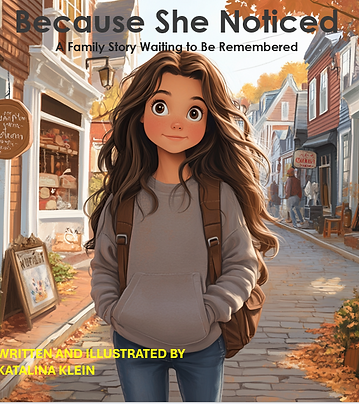
Q: What inspired you to write this book?
A: This book is dedicated to my father, who filled our childhood with stories of Ladino history, culture, and exile. His reverence for the past—and his belief that we carry pieces of it in us, whether we know it or not—was the seed. I wanted to write a story about what it feels like to uncover something that has always been there, waiting.
Q: Why did you choose a photograph to unravel the story?
A: Because photographs don’t explain—they suggest. A photo doesn’t raise its hand and say “look at me.” It waits. I wanted the story to begin with something quiet but loaded, something that could hold a mystery without giving it away. A photograph was the perfect way to start a story about hidden identity—because it invites the reader to look closer, just like the character does.
Q: What message do you want to leave with readers?
A: That identity isn’t always handed to us—it’s sometimes discovered. And that discovery can begin with a photograph, a question, or a name you hear differently one day. The past lives in us whether or not we’re looking for it—but when we do start looking, it has a way of rising to meet us.
Author Q&A with Katalina Klein
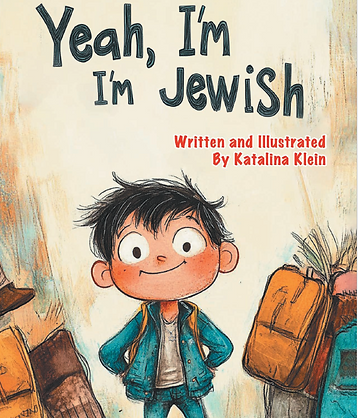
Q: What inspired you to write this book?
A: This book came from a very personal place. I wanted to give voice to the quiet, complicated feelings so many Jewish kids carry—the sense of pride, fear, confusion, and courage that can come with being visibly Jewish in today’s world. I wanted to create something honest that didn’t sugarcoat, but also didn’t give in to despair.
Q: What’s something meaningful about this book?
A: What means the most to me is that the story doesn’t try to resolve the tension—it holds it. Some kids feel joyful in their Jewish identity, others feel uncertain, and many feel both at once. This book creates space for all of those experiences, especially at a time when being openly Jewish can feel risky.
Q: What message do you want to leave with readers?
A: That you don’t owe anyone an explanation for who you are. Being Jewish today takes courage—not just to feel pride, but to stand up for yourself when it’s uncomfortable or unsafe. Your story is valid even when it’s complicated, and no one else gets to define it for you.